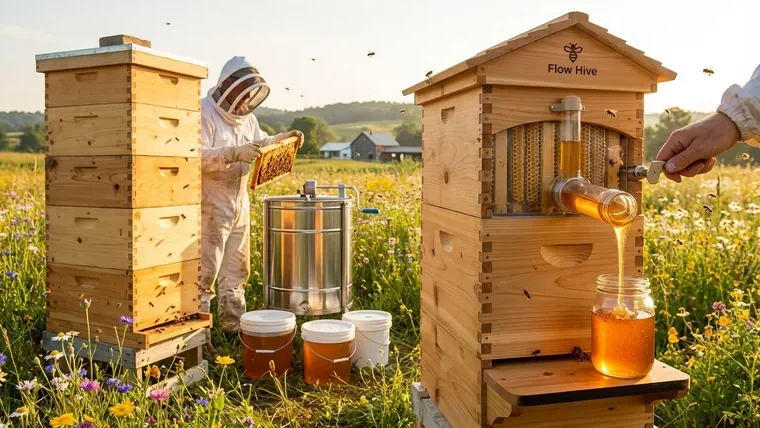
You pick up a jar of Tupelo honey from Florida at a specialty store, see the price, and quietly put it back. Thirty dollars for twelve ounces is difficult to justify when the clover honey sitting next to it costs four. The question most people walk away with is whether the price is simply a premium label on an ordinary product.
It is not. Tupelo honey comes from a single species of tree that grows only in the river swamps of northwestern Florida and southern Georgia, blooms for two to three weeks per year, and cannot be farmed or relocated to more accessible land. The price reflects six specific production constraints that directly limit how much can be harvested each year, none of which apply to the standard honey sitting beside it on the shelf.
Reason 1: The Tree Only Grows in One Region of Florida Swampland
The white tupelo tree requires waterlogged, swampy soil conditions found only in a few river ecosystems in the southeastern United States. Unlike most food products that can expand supply by planting more trees or leasing new land, tupelo honey producers are permanently limited by where the tree naturally grows. The trees grow in remote swamp terrain that cannot be replicated or scaled, and moving production elsewhere is simply not biologically possible.
Where Authentic Tupelo Honey Comes From
- Apalachicola River basin: Primary source, running through the Florida Panhandle
- Okefenokee Wildlife Refuge area: Along the Florida-Georgia border
- Chipola River system: Secondary waterways feeding the Apalachicola basin
- Selected Georgia wetlands: Smaller supply than Florida
Reason 2: The Bloom Window Is Two to Three Weeks Per Year
White tupelo trees bloom in late April and early May for two to three weeks, and outside this window, the flowers produce no nectar at all. A beekeeper who misses the bloom for any reason waits twelve months for the next opportunity, and with only one annual window available, total supply stays permanently low regardless of demand.
What the Two-Week Window Means in Practice
- One harvest per year: No second chances, regardless of how the first attempt goes
- Compressed timeline: All positioning, collecting, and removal happen in under three weeks
- Rain ends production: Once rain falls on the flowers, nectar stops for that entire season.
- Twelve-month wait: Any missed window means a full year before the next attempt
Reason 3: A Single Rainstorm Can Destroy the Entire Harvest
Tupelo flowers stop producing nectar the moment rain falls on them, so a storm during peak bloom does not reduce the harvest but ends it entirely for that season. The beekeeper loses the full season’s potential income in an afternoon. Equipment, transport, and labor costs are already spent, with no way to recover them.
What a Lost Harvest Means for a Beekeeper
- Full season income gone: One afternoon of rain eliminates months of preparation.
- Costs already committed: Equipment, transport, and labor spent with nothing returned.
- No partial recovery: There is no salvaging a rain-hit tupelo bloom mid-season
- Market supply drops immediately: Every affected apiary loses output simultaneously.
Reason 4: Swamp Beekeeping Requires Barges and Boats
Standard beekeeping places hives on dry, accessible land reached by truck. Tupelo beekeeping does none of this, because alligator populations in these swamps prevent the construction of traditional apiaries, so beekeepers build floating barge platforms along the river’s edge and transport all equipment by boat through narrow waterways.
What Swamp Beekeeping Actually Involves
- Floating barge hives: Built on platforms along riverbanks since dry ground is unavailable
- Boat-based transport: All equipment moved through narrow waterways, not roads
- Alligator populations: Prevent standard ground-based apiary construction entirely
- Remote access: Specialized vessels required to navigate shallow river channels
Reason 5: Hives Must Be Moved Before and After Every Bloom
Before the bloom, hives are transported into the swamp and positioned along flowering riverbanks. After it ends, every hive moves out before bees begin collecting nectar from surrounding flowers, because a jar labeled pure Tupelo honey in Florida must contain only Tupelo nectar. Any other nectar in the batch compromises that certification entirely.
The Cost of Moving Hives Through Swamp Terrain
- Twice per season: Full relocation in and out through difficult swamp terrain
- Hundreds of hive boxes: Each heavy, handled on unstable floating platforms
- No road access: All movement via boat through shallow, narrow waterways
- Precise positioning: Hives placed to maximize exposure during the brief bloom window
Reason 6: Purity Standards Reject Any Batch That Falls Short
Authentic Tupelo honey from Florida is tested for its fructose-to-glucose ratio to verify purity, and a batch that fails because bees collected nectar from surrounding flowers cannot be sold as pure Tupelo honey regardless of the effort behind it. Conventional honey retails for approximately $7.50 per pound on average, while a 12-ounce jar of pure tupelo honey typically costs $25 to $35. A failed batch sells at conventional honey prices, meaning the producer recovers only that rate despite the full cost of swamp production behind it.
How Purity Is Tested and Why Batches Fail
- Fructose ratio testing: Every batch is tested against the 43 to 44 % threshold
- Timing contamination: Bees collecting from surrounding flowers before or after peak bloom compromise the batch
- No partial credit: A batch below the threshold sells as conventional honey regardless of how close it falls
- Full investment lost: All production costs already spent on any failed batch with no premium return
Is Tupelo Honey Florida Worth the Price?
Comparing Tupelo honey to conventional honey on price alone ignores the production conditions that make them fundamentally different products. One is harvested from managed apiaries on accessible land through multiple seasons each year. The other comes from a single swamp region, once a year, by beekeepers navigating alligators and flooding on floating platforms during a window that rain can close at any moment. The table below puts the difference in concrete terms.
The Price Breakdown
| Factor | Conventional Honey | Tupelo Honey Florida |
| Geographic range | Produced across most of the US | One river swamp region in Florida |
| Bloom window | Multiple seasons per year | Two to three weeks annually |
| Weather risk | Partial crop loss possible | Entire harvest eliminated by rain |
| Beekeeping terrain | Standard agricultural land | Alligator-populated swampland |
| Equipment | Standard hive boxes | Floating barges and boats |
| Crystallization | Within weeks to months | Stays liquid for years |
| Retail price | $7.50 per pound average | $25 to $35 per 12-ounce jar |
How to Verify You Are Buying Authentic Tupelo Honey
Not every jar labeled Tupelo honey contains pure Tupelo nectar, because blended versions mix Tupelo with other honeys at a significantly lower price. Before buying, these markers confirm you are getting the genuine product.
- The word pure on the label: Blended versions rarely use this term because they cannot support it
- Specific harvest location: Authentic jars name the Apalachicola River basin or a specific Florida source
- Fructose certification: Reputable producers provide lab-verified fructose ratio documentation
- Price check: Pure tupelo honey under $15 per 12 ounces is almost certainly blended
- No crystallization in the jar: Granules or cloudiness indicate it is not pure tupelo
Pro-Tip:
If a jar of tupelo honey has crystallized, it is either blended with another variety or stored at very cold temperatures for an extended period. Authentic pure Tupelo honey from Florida stays smooth at room temperature for years without any intervention.
FAQs
Why does Tupelo honey cost so much more than regular honey?
The bloom window lasts two to three weeks annually, a rainstorm can eliminate the entire harvest, and beekeepers work alligator-populated swampland using floating barges rather than standard equipment. Each of these factors adds production cost that conventional honey never faces, and all of them compress into a single short season each year.
Where does authentic Tupelo honey from Florida come from?
Primarily from the Apalachicola River basin in the Florida Panhandle, with secondary supply from wetland areas near the Okefenokee along the Florida-Georgia border. The white tupelo tree cannot grow outside these specific swamp ecosystems, making geographic supply permanently fixed.
Why does Tupelo honey never crystallize?
Tupelo honey contains 43 to 44 % fructose compared to approximately 38 % in most honey. This higher fructose ratio prevents crystallization and keeps the honey smooth and liquid for years at room temperature.
How do I know if the Tupelo honey I am buying is authentic?
Look for the word pure alongside a specific harvest location such as the Apalachicola River. Authentic producers publish fructose test results. Blended tupelo honey costs significantly less and crystallizes like conventional honey because it contains other nectar sources.
Can Tupelo honey be produced anywhere other than Florida?
No. White tupelo trees require waterlogged swamp conditions found only in northwestern Florida and southern Georgia. The trees cannot be transplanted to more accessible locations, making geographic supply permanently fixed.
How short is the Tupelo honey harvest season?
The white tupelo blooms for two to three weeks in late April and early May each year. Once the bloom ends, no more nectar is produced until the following spring, giving beekeepers one narrow window per year to complete the entire harvest.
Wrap Up
If authentic Tupelo honey from Florida is on your list, seek out producers who publish their harvest location and fructose test results. Those details separate the genuine product from blended versions sitting next to it for half the price.
Smiley Honey is one of the most trusted sources for pure Tupelo honey in Florida, with documented harvest locations, fructose ratio certifications on every batch, and a direct relationship with the Apalachicola River basin beekeepers who produce it. Every jar comes from the same small stretch of Florida swampland that makes this honey what it is. If purity and provenance matter to you, it is the standard worth holding any tupelo honey to.