
When people experience back or neck pain, they often focus on where it hurts the most. However, the location of pain can reveal much more than simple discomfort. In many cases, the pattern of pain, numbness, or tingling provides important clues about which spinal nerve may be affected.
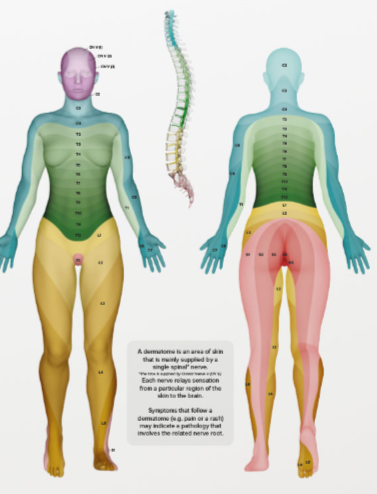
This is where dermatomes become especially valuable. Dermatomes are specific areas of skin connected to individual spinal nerves, creating a map that helps healthcare professionals better understand nerve-related symptoms. By recognizing these patterns, doctors can more accurately identify the source of pain and recommend the most appropriate treatment.
Understanding dermatomes can also help patients better communicate their symptoms during medical evaluations.
What Are Dermatomes?
A dermatome is an area of skin supplied by sensory fibers from a single spinal nerve.
Your spinal cord contains multiple nerve roots, and each one is responsible for sending sensory information from a particular region of the body to the brain.
Because every spinal nerve serves a predictable area, symptoms such as:
- pain
- numbness
- tingling
- burning sensations
- altered sensation
often follow recognizable patterns.
These patterns help physicians determine which nerve may be irritated or compressed.
Why Pain Doesn’t Always Stay in One Place
Many patients are surprised when pain travels away from the spine.
For example:
- a neck problem may cause pain in the shoulder or arm
- a lower back condition may create discomfort in the leg or foot
- tingling may appear in the fingers instead of the neck
This happens because compressed nerves transmit signals along their entire dermatome rather than only at the point where the nerve is affected.
Understanding this concept helps explain why the location of symptoms is sometimes very different from the actual source of the problem.
Common Symptoms Related to Dermatome Patterns
Nerve-related symptoms may include:
- sharp pain
- burning pain
- numbness
- tingling
- muscle weakness
- increased sensitivity
These symptoms often follow predictable pathways rather than appearing randomly.
Recognizing these patterns allows healthcare providers to narrow down possible causes before additional testing is performed.
Dermatomes Help Identify Nerve Compression
Conditions affecting the spine can place pressure on spinal nerves.
Some common causes include:
- herniated discs
- spinal stenosis
- degenerative disc disease
- bone spurs
- spinal injuries
When a nerve becomes compressed, symptoms often appear within the dermatome served by that particular nerve.
Instead of simply treating the area where pain is felt, physicians work to identify and address the underlying cause of the nerve irritation.
Why Accurate Diagnosis Matters
Back pain can have many different causes.
Two patients may both complain of leg pain while having completely different spinal conditions.
Healthcare providers evaluate several factors, including:
- symptom location
- pain pattern
- muscle strength
- reflexes
- medical history
- imaging studies
Dermatome patterns become one important piece of the diagnostic process.
Combining these findings with physical examinations and imaging helps improve diagnostic accuracy.
Modern Imaging Supports Dermatome Evaluation
While dermatomes provide valuable clinical information, they are usually considered alongside diagnostic imaging.
Common imaging tools include:
- MRI scans
- CT scans
- X-rays
These tests help confirm whether a spinal nerve is compressed and identify the exact location of the problem.
Together, symptom patterns and imaging create a more complete picture of the patient’s condition.
Not Every Pain Pattern Indicates Nerve Damage
Although dermatomes are extremely useful, not every pain complaint follows a dermatome.
Muscle strains, ligament injuries, and joint problems often produce pain that does not match specific nerve pathways.
For this reason, healthcare providers perform comprehensive evaluations instead of relying on a single symptom.
Proper diagnosis is essential before any treatment plan is developed.
Dermatomes Help Guide Treatment Decisions
Once the affected nerve is identified, treatment can be tailored to the patient’s condition.
Depending on the diagnosis, treatment may include:
- physical therapy
- medication
- spinal injections
- activity modification
- minimally invasive procedures
- surgery when appropriate
Knowing which nerve is involved allows treatment to focus on the underlying cause rather than simply managing symptoms.
Learning About Your Symptoms Can Improve Communication
Patients who understand their symptoms often have more productive conversations with their healthcare providers.
Being able to describe:
- where pain begins
- where it travels
- when numbness occurs
- which movements trigger symptoms
helps specialists evaluate spinal conditions more effectively.
For individuals interested in learning more about how nerve pathways relate to spinal health, Dermatomes provide valuable insight into how the body’s sensory map helps identify the source of nerve-related pain.
The Importance of Personalized Spine Care
Every patient experiences spinal conditions differently.
Even when two individuals have the same diagnosis, symptoms, activity levels, and treatment goals may vary considerably.
That’s why personalized evaluation is an important part of modern spine care.
At inspired spine, specialists evaluate each patient’s symptoms, diagnostic findings, and overall health to develop individualized treatment plans designed to address the root cause of spinal pain rather than simply treating the symptoms.
The location of your pain can provide valuable clues about what’s happening inside your spine. Dermatomes help healthcare professionals identify which spinal nerves may be involved, making them an important part of diagnosing many neck and back conditions.
While pain patterns alone cannot provide a complete diagnosis, understanding how dermatomes work helps patients better recognize their symptoms and communicate them during medical evaluations. Combined with advanced imaging and a comprehensive physical examination, dermatome mapping plays an important role in developing accurate diagnoses and effective treatment plans for a wide range of spinal conditions.


